

Take a free sports analytics assessment:
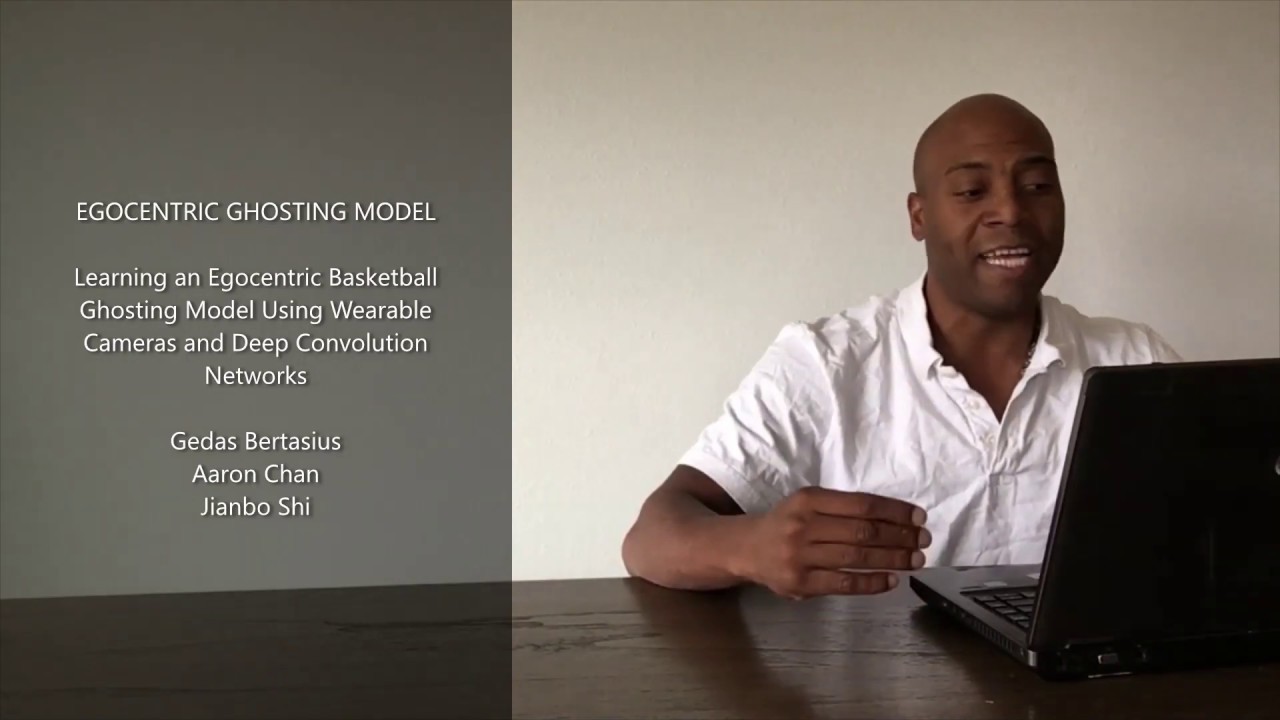
Egocentric Ghosting Model
Victor Holman, The Sports Analytics Expert, presents Sports Analytics 3 Minute Drill - Egocentric Ghosting Model.
Learning an Egocentric Basketball Ghosting Model using Wearable Cameras and Deep Convolutional Networks
The use of data-driven ghosting models is increasing as player tracking data becomes more widely available.
The issue with the models that have been previously constructed is that their analysis of the players' decisions is based solely on the tracking data.
The only predictor of future behavior is the player's position on the court.
However, a player in a game bases his decisions on more than just his own position; they also take into account a variety of other factors.
These factors include information such as
where his teammates are located
where the defenders are located
and the physical characteristics of the defenders
to name just a few.
In order to account for this multitude of factors an egocentric basketball-ghosting model is developed using data gained from cameras worn by players during their games.
The data collected consisted of 988 basketball sequences from a game of one-on-one basketball played by nine college players.
The one-on-one format provides better data for studying the decision-making process of basketball players.
When a team is on the court, a player's decisions are often based on the decisions and time of the teammate who has the ball.
In a one-on-one game, the players are constantly making the decisions themselves, as they do not have any teammates to rely upon.
All sequences were mapped on a single map, with blue dots indicating the beginning of a sequence and yellow dots indicating the end of a sequence.
The map clearly showed that the sequence covered a wide variation of possibilities, therefore creating a strong database on which to build the model.
The egocentric ghosting model generated data that was consistent with behaviors demonstrated by basketball players.
It illustrated sequences of a player heading for the basket, then quickly changing directions.
Evaluating the image showed that the sequence was very logical as it took into account attributes of the opposing player,
including their positioning which would indicate the direction or move they planned to employ.
Looking at various sequences allows a coach to determine where there are open spaces on the court that could be used by their players more effectively.
The sequences could also be used as a coaching tool to enable players to learn how to read their opponents more effectively.
It would also aide in learning how and where to position themselves in different situations, which would allow them to maximize their scoring potential.
Coaches of younger players could use the sequences to teach their players how professional basketball players make decisions while playing games.
The young basketball players could then improve their own skills by imitating the professionals.
And that is an example of the egocentric ghosting model in 3 minutes.
Another analytic method applied in this research was deep convolutional networks.


0 Comments